
A cat hiding all of a sudden usually means something in their world has changed, whether that’s a startling noise, a shift in routine, or a health problem your cat is trying to mask. Cats are experts at concealing weakness, so a sudden hiding spell deserves your attention, especially when it stretches past a day. Picture the scene: you walk in the door, call your cat’s name, and the usual greeting never comes. You check the sofa, the closet, the laundry basket. Nothing. Then you spot two glowing eyes beneath the bed, and your cat refuses to budge. That wave of worry is exactly why so many Fort Mohave pet owners reach out to Advanced Animal Care. The explanation can be harmless or urgent, and the clues below will help you tell a cat tucked away for comfort from a cat hiding because something is wrong.
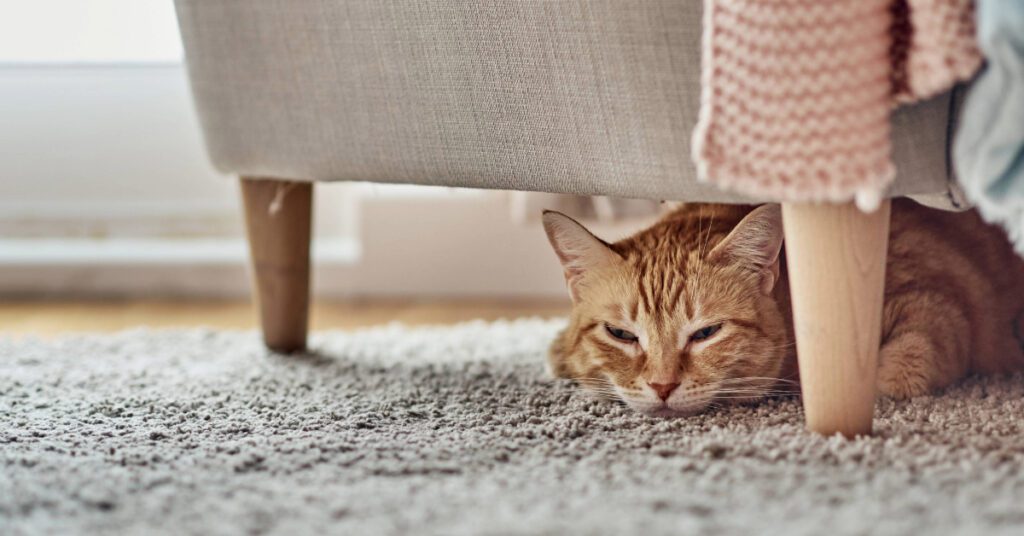
Why Do Cats Suddenly Start Hiding?
Most sudden cat hiding traces back to a change in the home environment, and that change can be small enough that you barely noticed it yourself.
Stress and Environmental Changes
Cats treat their territory like a carefully balanced system, and disrupting that balance can send them straight into a closet. Moving furniture, welcoming a new baby, hosting relatives, or hearing construction next door can all tip the scales. Here in the Mojave Desert, summer monsoon thunderstorms and holiday fireworks are common triggers. A cat hiding during loud weather is reacting to fear, and the behavior often fades once the noise passes and the house settles down again.
Instinct and Personality
Hiding is hardwired into feline behavior. In the wild, a small predator that is also prey for larger animals survives by resting out of sight. Shy cats, newly adopted cats, and cats who share space with a rowdy dog may retreat to high shelves or tight spaces simply to feel secure. Some cats also choose hidden spots for sleeping, so a cozy nap location on its own does not signal trouble. Territory matters too. A neighborhood stray wandering past the window can leave an indoor cat feeling cornered, and a cat hiding for several hours after such a sighting is often just sorting out its nerves.
These everyday triggers often go unnoticed by owners:
- An unfamiliar scent on your clothes after you visit another animal
- A relocated litter box or a switch to a different litter brand
- A houseguest’s open suitcase left on the bedroom floor
- A robot vacuum humming through a room your cat considers its own
- Triple-digit afternoons that push cats toward cool bathtubs and cabinets
When Is Hiding a Sign That My Cat Is Sick?
Hiding becomes a medical red flag when it arrives alongside other changes, because cats instinctively mask pain and illness for as long as they can.
Behavior Changes That Travel With Hiding
A cat hiding alongside skipped meals, litter box avoidance, or sudden irritability tells a very different story than a cat who dashes under the bed when the vacuum starts. Veterinarians regularly hear owners say their cat spent days out of sight before any other symptom appeared. Because cats rarely cry out or limp dramatically, withdrawal can be the first and sometimes the only clue that something hurts. Subtle shifts count as well, such as a cat who still eats but no longer greets you at the door or climbs into a favorite lap.
Why Illness Pushes Cats Into Seclusion
A sick or painful cat feels vulnerable, and instinct says to retreat somewhere quiet and enclosed until strength returns. Problems involving the urinary tract, teeth, joints, digestive system, or lungs can all trigger that response, as can an injury from a fall or a scuffle outdoors. Only a hands-on exam can sort out which cause is behind a particular case of cat hiding, which is why guessing at home rarely leads anywhere useful.
Take note when cat hiding appears together with any of these specifics:
- A hunched posture or a flinch when touched along the back or belly
- Repeated litter box trips that produce little or nothing
- Open-mouth breathing, which cats seldom do
- Squinting eyes or visible discharge
- Drooling, or food dropped while chewing
When Should I Take My Cat to the Veterinarian?
Call your veterinarian if cat hiding lasts longer than 24 hours, or sooner if your cat has stopped eating or drinking.
Situations That Call for a Prompt Visit
Cats who go without food can develop serious liver complications faster than most owners expect, so a day or two of refused meals carries more weight for a cat than it would for a dog. Labored breathing, collapse, or any known trauma also calls for an immediate phone call. A male cat who strains without producing urine is an emergency and needs to see a veterinarian immediately. If a hiding cat shows any of these signs, do not wait to see whether it passes. Senior cats and cats with existing conditions can decline even faster, so owners of those cats should lean toward calling early.
What Happens at the Appointment
At Advanced Animal Care, the visit begins with your cat’s story: when the hiding started, what shifted at home, and how appetite and litter box habits have looked lately. A full physical exam follows, and your veterinarian may recommend diagnostics such as bloodwork or imaging depending on what the exam reveals. Your observations steer that process. If your cat will not come out for a photo, a short video of the hiding spot can still tell your care team a great deal.
These details give our veterinary team the most to work with:
- The date and approximate time you first noticed the change
- Any new foods, medications, plants, or cleaning products in the house
- How often the water bowl needs refilling compared with last week
- Video of unusual movement, vocalizing, or breathing
Do Some Cats Hide More Than Others?
Yes, because age, background, and temperament all shape how often a cat retreats from the action.
Kittens, Adults, and Seniors
Kittens tuck themselves into boxes, bags, and sock drawers for the sheer fun of it, so occasional hiding in a young cat is usually playful. Senior cats tell a different story. Busy rooms can feel overwhelming when arthritis or other age-related changes make movement uncomfortable, and an older cat who suddenly prefers the closet is worth mentioning at the next wellness exam. Adult cats between those life stages usually settle into predictable routines, which makes any new pattern of hiding easier to spot.
Rescues, Shy Cats, and Multi-Pet Homes
Rescued cats frequently spend their first weeks under furniture while they learn which sounds and people are safe. A newly adopted cat needs patience as well as time, and sharing its history with the veterinarian helps separate normal adjustment from illness. In homes with several pets, a cat hiding from a housemate may be dodging tension rather than battling illness. Learning your own cat’s normal habits is the best tool you have, since you will recognize a true change far faster. Regular checkups give your veterinarian a baseline for comparison, too.
Your Cat Is Trying to Tell You Something
Every cat has a favorite hideaway, but a sudden break from routine is a message worth taking seriously. Some episodes of cat hiding end on their own within hours, while others point to discomfort that needs professional attention. You know your cat’s personality better than anyone, and that knowledge is valuable in an exam room. If your cat has been out of sight longer than usual, call Advanced Animal Care in Fort Mohave, AZ, at 928-770-4918 to talk through what you have seen.
Our team will listen to your concerns, examine your cat with care, and explain what they find in plain language so you can decide on next steps with confidence. Your notes, photos, and instincts all help, and no question is too small when your cat’s comfort is on the line.