
Why do pets need teeth cleanings under anesthesia? Anesthesia lets a veterinary team clean, examine, and image every tooth, including the roots and gumline where most dental disease hides. An awake pet cannot hold still or tolerate that level of care. Many Fort Mohave pet owners hesitate at the word anesthesia, and that worry is understandable. Maybe your dog’s breath could clear a room, or your cat drops her kibble on one side of her mouth. A quick scrape of visible tartar sounds appealing, especially when it promises no sleep, less risk, and a smaller bill. Our veterinarians at Advanced Animal Care hear this concern often, and the answer to why pets need teeth cleanings under anesthesia deserves a thorough explanation.
Why Is Anesthesia Necessary for Pet Dental Cleanings?
Anesthesia makes a complete cleaning possible, and that fact sits at the heart of the answer when owners ask “Why do pets need teeth cleanings under anesthesia?”
Reaching Below the Gumline
The tartar you can see on a tooth is only a small part of the problem. Dental disease lives under the gumline, where bacteria collect around the tooth root and the bone that supports it. Veterinary dentists note that reaching the area under the gums of every tooth is impossible in an awake dog or cat. A probe must travel around each tooth to check for pockets, and a scaler must clear plaque and tartar from those hidden spaces. Pets cannot cooperate with that process, and no reasonable owner would expect them to. Because many of these problems stay hidden until they are advanced, a pet can look comfortable while living with infected teeth.
Stillness, Comfort, and a Protected Airway
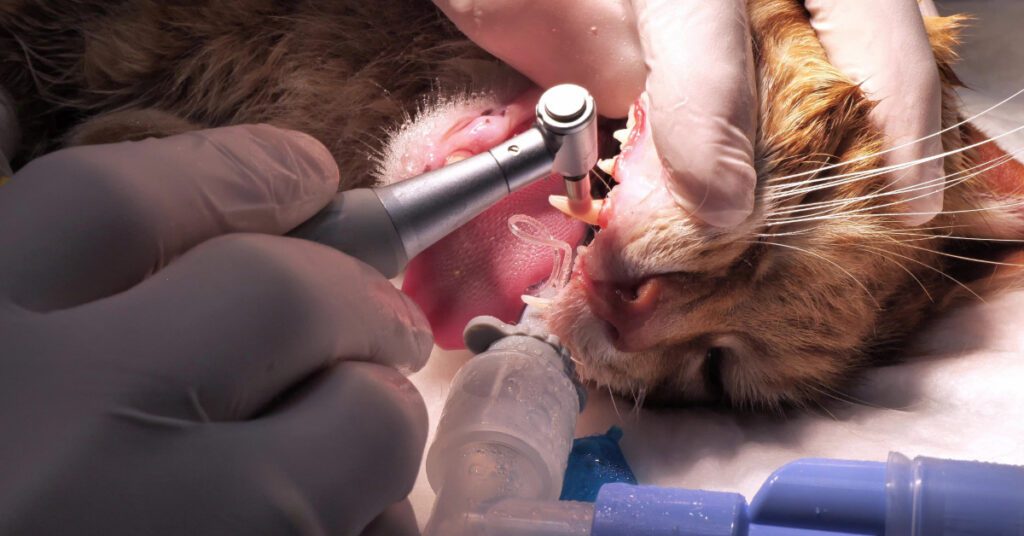
Anesthesia keeps the patient still, which protects delicate mouth tissues from sudden movement and protects the dental team from bites. It also spares pets the discomfort of having sore teeth and gums examined and treated. Once a pet is asleep, a breathing tube delivers oxygen and prevents water, bacteria, and debris from slipping into the lungs during ultrasonic scaling. The American Animal Hospital Association requires general anesthesia with intubation for dental procedures at its accredited hospitals, a standard that shows how seriously the profession takes the issue.
Are Anesthesia Free Teeth Cleanings Safe or Effective?
Anesthesia-free cleanings look gentler on the surface, yet when owners ask “Why do pets need teeth cleanings under anesthesia?” the evidence shows that awake options fall short on both safety and results.
What an Awake Scaling Can and Cannot Reach
These services generally remove visible tartar from the crown of the tooth, which can make teeth look whiter. That cosmetic change may convince owners the problem is solved, while disease below the gumline continues untouched. An awake pet also cannot receive full-mouth dental X-rays or a complete oral exam. Polishing, which smooths the enamel after scaling, also requires a still patient, since rough enamel left behind can invite plaque back sooner. Owners who wonder “Why do pets need teeth cleanings under anesthesia?” should know that a polished smile and a healthy mouth are two very different things.
Risks and Stress for the Pet
Restraining a conscious pet while sharp instruments work inside the mouth can frighten the animal, and even slight head movement can injure the gums, tongue, or lips. A startled pet may also bite the person holding the scaler. Infected or painful teeth hurt more when they are probed while the pet is awake, which turns a routine visit into a miserable one. When owners ask whether pets need teeth cleanings under anesthesia or whether an awake option can do the same job, the veterinary dental community gives a consistent answer. Anxious pets may also associate the whole experience with fear, which can make later veterinary visits harder for everyone.
Be cautious about any dental offering that does the following:
- Skips a veterinary exam before the cleaning begins
- Promises results without any dental X-rays
- Scrapes only the visible surfaces of the teeth
- Operates without a veterinarian overseeing the care
What Happens During a Professional Pet Dental Cleaning?
A professional dental visit follows a careful sequence, from a pre-anesthetic examination to a monitored recovery.
Preparing Your Pet for the Day
The process begins with an exam and a review of your pet’s health history. Veterinary teams commonly recommend pre-anesthetic bloodwork to check how the organs are functioning, and they will share instructions for the day before and the morning of the procedure. The team also asks about medications, past reactions to sedation, and any signs of mouth pain, such as drooling or pawing at the face. Knowing what to expect helps owners decide with confidence, because the question “Why do pets need teeth cleanings under anesthesia?” becomes far less intimidating once the steps are laid out.
Inside the Cleaning Itself
While your pet sleeps, a team member monitors vital signs and your veterinary team works through the mouth methodically. At Advanced Animal Care, cleanings use ultrasonic scaling to remove plaque and tartar from all tooth surfaces above and below the gumline, followed by polishing, and digital dental X-rays. These x-rays let the team check what lies beneath the gums. Any oral surgery is then performed by the veterinarian to remove any diseased or broken teeth. Afterward, pets are watched closely as they wake, and owners receive guidance about aftercare.
A typical dental procedure moves through these stages:
- A full-mouth exam, with each tooth probed and charted
- Digital dental X-rays to evaluate roots and surrounding bone
- Scaling above and below the gumline
- Polishing to smooth the enamel and slow future plaque buildup
- Extractions with nerve blocks for comfort when a tooth is too diseased to save
How Safe Is Anesthesia for My Pet?
Modern veterinary anesthesia is built around safeguards, and every pet receives an individual assessment before the procedure begins.
Screening and Monitoring
Veterinary teams typically assess each pet’s health before anesthesia and adjust the plan to fit. During the procedure, a dedicated team member tracks heart rate, breathing, oxygen levels, blood pressure, and body temperature, and the team provides pain control for comfort. Owners who ask “Why do pets need teeth cleanings under anesthesia?” are often really asking whether anesthesia is safe, and these safeguards are the reassuring half of the answer. Anesthetic protocols are chosen for each pet’s age, breed, and health, which is why the question whether pets need teeth cleanings under anesthesia gets a personalized answer at every exam.
Senior Pets and Health Conditions
Age alone is not a disease, and many older pets undergo dental care successfully. Pets with heart, kidney, or other conditions may need extra planning, and your veterinarian tailors the approach to the individual patient. Untreated dental infection can also affect more than the mouth, so postponing care carries its own risks. Pre-anesthetic testing can also uncover hidden concerns before they become problems. If your pet has health concerns, a candid conversation with your veterinarian before the appointment is the best place to start.
Healthy Mouths Support Happy Pets
A clean, comfortable mouth changes how a pet eats, plays, and snuggles up beside you. If you have wondered, “Why do pets need teeth cleanings under anesthesia?” for your own dog or cat, call Advanced Animal Care in Fort Mohave, AZ, at 928-770-4918. Every wellness visit includes a dental exam, and pets seen for an exam within the past 12 months can receive a free dental evaluation from a technician. Bring your questions about the procedure, the risks, and what recovery looks like, and our veterinarians will answer them in plain language.
Our team can also help you match at-home options, such as brushing, dental chews, wipes, dental diets, and water additives, to your pet. Dental disease tends to progress quietly, so bad breath, drooling, dropped food, or red gums are all worth mentioning at your pet’s next visit. A dental evaluation can reveal what lies beneath the surface, which is the clearest answer to “Why do pets need teeth cleanings under anesthesia?” and acting sooner can mean a more comfortable mouth for years to come.